Reboot by Justin Taylor: REVIEW
Goodreads Blurb
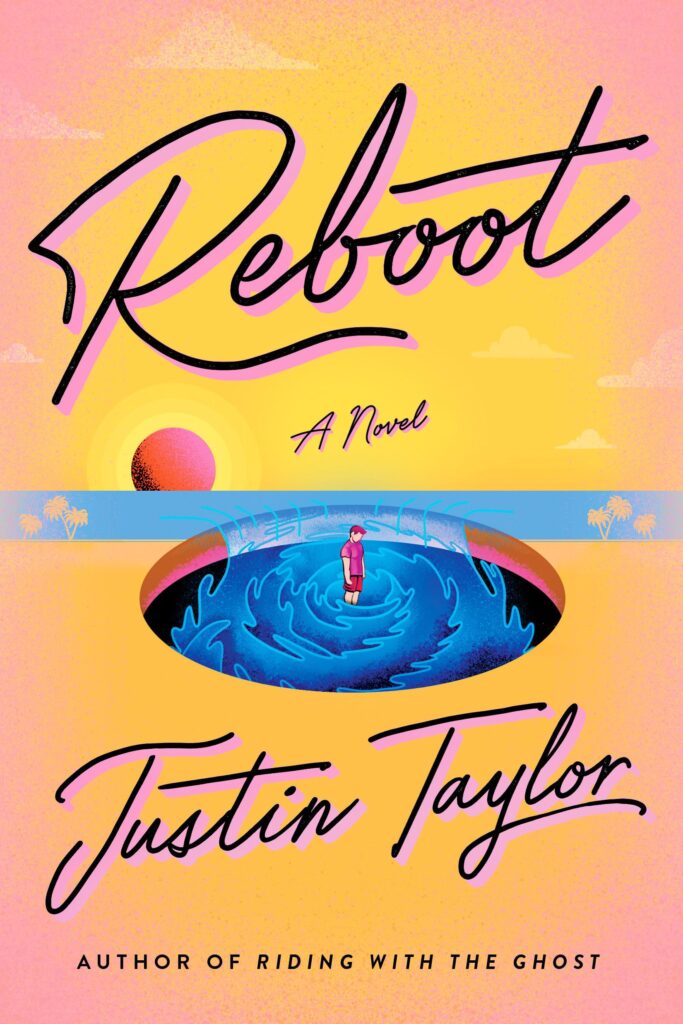
David Crader is a has-been. A former child actor from the hit teen drama Rev Beach, he now rotates between his new roles as deadbeat dad, recovering alcoholic, and occasional videogame voice actor. But when David is summoned to Los Angeles by Grace, his ex-wife and former co-star, he suddenly sees an opportunity for a reboot—not just of the show that made him famous, but also of his listless existence.
Hollywood, the Internet, and a fractured nation have other plans, however, and David soon drinks himself to a realization: This seemingly innocuous revival of an old Buffy rip-off could be the spark that sets ablaze a nation gripped by far-right conspiracy, climate catastrophe, and mass violence.
Reboot is a madcap speculative comedy for our era of glass-eyed doom-scrolling and Millennial nostalgia—and yet it’s still full of heart. It’s a tale of former teen heartthrobs, striving parents, internet edgelords, and fish-faced cryptids, for anyone who has looked back on their life and wanted—even if but for a moment—to hit “reset.”
My Review
It’s been a few days since I finished reading this book, so my thoughts have had a chance to percolate. I still feel like whatever I write here won’t even scratch the surface of what this book left me thinking about, but here goes.
The first thing I need to say is that I feel bad for whoever’s job it was/is to market this book. It’s impossible to assign it a genre, near impossible to even define the tone. “Smart satire” and “speculative comedy” don’t really cover it. Yes, there’s satire here, and yes, it’s incredibly smart, but the tone often feels a lot more serious than that. Yes, there are moments that will make you laugh, and yes, it’s set in a slightly futuristic version of today’s world, but a lot of it is all too current and real. At times I got the feeling that Taylor was trying to warn us of our impending fate, and an edge of desperation or even helplessness would break through the satire. Those were the times I loved this book the most.
But I’m getting ahead of myself.
The nostalgia
I picked up this book knowing almost nothing about it. I think I had the impression it would be similar to some of the unhinged-woman books I’ve read recently, which it kind of wasn’t. Anyway, not knowing what to expect, the first thing that hooked me as I started reading was the early-2000s fandom nostalgia.
I was hugely involved in TV fandoms back then, so when David Crader looks back on the TV show he grew up on and explains how its fandom developed and behaved, the websites they met on (LiveJournal!), etc., it threw me right back to the good ol’ days. There’s also a lot of talk about video games and their fandoms, which I’ve never been involved in but would probably stir up nostalgia for those who have. It’s actually a really clever way to start a book about the “reboots” in life – making us think about the way life was before doom scrolling took over our screentime.
The many reboots of life
Because “Reboot” doesn’t just refer to the TV show Crader is about to make. Taylor throws back to the title of the book in every single aspect of the plot. Crader’s relationships, his dead-end life, his son (“in having our child she’d also birthed a new version of herself: a reboot, let’s say. We’d both rebooted for him, only my show had gotten canceled while hers had not”), his addictions, and even life on Earth as a whole are said to be in dire need of a reboot. Which brings me to…
The climate
My favourite thing about this book is the way Taylor weaves the effects of climate change into the plot. Just like the volatility of the climate is starting to shape our daily lives, so it shapes every scene. Characters have to change their plans because of the smoke from wildfires. Conversations take different turns because the characters are wearing masks and can’t read each other’s expressions. Random massive storms (“the storm of the century of the week”) pop up and disrupt travel. Floods and sinkholes threaten to stop production of the reboot. Everywhere the characters turn, they’re faced with the effects of an unpredictable climate.
But just as we all end up doing in real life, the characters mostly just put up with it, adapt their behaviour, change their plans, and carry on (at least until something major happens that grabs everyone’s attention). I really love the way Taylor keeps climate a constant obstacle for the characters throughout the whole story, and how it becomes a warning to the reader about how bad things could get before we finally take action. Really well done.
The bizarre (skip this section if you want to avoid spoilers)
There’s one more aspect of the storyline I want to talk about, but it requires giving spoilers, so please skip this section if you want to read the book without knowing specifics.
Once you’re invested in the story of Crader’s quest to rejuvenate his career and his life, and you’ve settled into a rhythm with the satirical-but-also-serious tone, you’re hit with a blast of… magical realism? Science fiction? Crader is handed a pill that can supposedly make it possible to breathe underwater. At first I thought, “Wow, he must really be tripping to believe that,” but then it seemed to be really happening? I was confused for a minute. But then this quote happened, after Crader had breathed in the water of a swimming pool for several minutes:
“It’s still good you didn’t go in the Gowanus,” she said. “Assuming it is science and not magic, then it stands to reason that the usual rules apply as far as your body absorbing the pollutants that are in the substance you’re consuming. So, the Gowanus would be lungfuls of cancer and human shit. Even here, you’re mainlining quite a bit of chlorine.”
“I hadn’t thought of that. I do feel kind of lightheaded.”
And later on, after Crader has been ruminating on a potential utopian future on another planet:
But my vision didn’t last long. It was hard to feel utopian with chlorine in my blood.
That line, “hard to feel utopian with chlorine in my blood,” threw me for a loop. I had to sit and let it soak in for a minute (the sentence, not the chlorine). Crader had just accomplished something wonderful – he could breathe underwater! But there was nowhere that he could breathe in toxin-free water. That’s what we’ve done to our planet. And now, because we’re experiencing the consequences to our actions on Earth, we’re thinking of colonizing other planets?
What was this future we were flailing toward, with its fires and floods? Its rolling blackouts and tornadoes? Where was the reboot on this? The plot twist, the science fiction dream turned real scientific breakthrough, that would make everything okay?
Okay, done with spoilers now
At this point, I realized I was reading a masterpiece of social criticism. Suddenly I wished I were in university again so I could write a 3,000 word essay on this novel through an ecocritical lens. Honestly, if I were putting together a course in literary ecocriticism, I’d put Reboot on the curriculum.
Can you tell I really really enjoyed this book? I’ll be thinking about it for a long time. I read it as an ebook, but I plan to get a physical copy and re-read it, annotate it, the full works. Don’t be surprised if it ends up in my top 10 reads of 2026.
Obligatory affiliate links
If you’d like to buy this book and would like to support your local independent bookstores as well as yours truly while doing so, feel free to use the affiliate links below.
US and UK: Bookshop.org
Canada: Booksellers.ca
Leave a Reply