Ancient Egyptian: Writings from Ancient Egypt
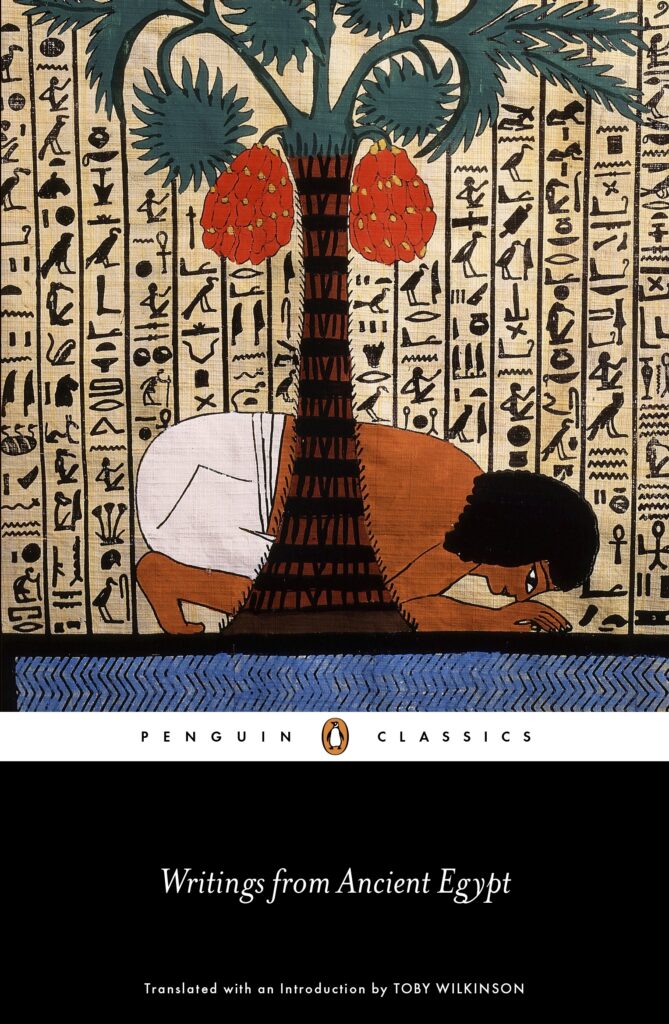
Let me just preface this Very Serious Analysis of Writings from Ancient Egypt by saying: OMG I don’t think I’ve ever had a floppier Penguin paperback! I’m in love. 😍
Now that that’s out of the way…
Writings from Ancient Egypt overview
This Penguin collection is translated and compiled by Toby Wilkinson, and it contains some well-known and several rarely-seen texts from Ancient Egyptian literature. It’s divided into the following sections: Autobiographical Inscriptions, Battle Narratives, Hymns, Lamentations, Legal Texts, Letters, Mortuary Texts, Royal Inscriptions, Songs, Tales, and Teachings.
Interesting Insights
In Wilkinson’s introduction, he offers a lot of interesting information about Ancient Egypt and its literature. For instance, he points out that “there is not a single named ancient Egyptian writer with an attributed body of work” (xiv). Indeed, the only credit given for these works is to the pharaoh or noble who commissioned them. Most were written by nameless scribes.
And yet, in the Teaching called “Be a Writer,” young students are told that writers’ “names are proclaimed on account of their books which they composed while they were alive,” and that a writer’s “writings make him remembered in the mouth of the reader” (p. 286-287). Is this a contradiction? Probably not. The final line of the piece is, “They are gone, their names forgotten; but writings cause them to be remembered” (p. 287). This indicates that the writing itself meant more to ancient Egyptian writers than signing their names to them would. In a sense, speaking the words they wrote is, to them, like speaking their name. It’s kind of thrilling to know that just by reading this text, you’re fulfilling its teaching. We don’t know the name of the scribe who wrote it, but he lives on in his words.
It’s also interesting to note that, while the vast majority of ancient Egyptians were illiterate, these texts were popular with all social classes thanks to their oral traditions. The fictional Tales were “written to be read aloud, to be performed” (p. 233), and the Songs were typically sung by blind harpists to a rapt audience (p. 223).
Women in Ancient Egypt
One stand-out text in this collection is the will of a woman named Naunakht. Her will reveals that the women of ancient Egypt were allowed to own their own property, even after marriage, and to bequeath it to whomever they chose. Naunakht, in a rather rousing “You go, girl” moment, disinherits those of her children who didn’t look after her in her old age. Her curmudgeonliness is on full display when she says, “I brought up these eight servants of [Pharaoh’s] and gave them a household – everything as is customarily done for those of their standing. But, look, I am grown old and, look, they do not care for me in turn” (p. 135). You can just picture her righteous scowl!
Conclusion
I love this collection. I highly recommend it if you’re interested in ancient Egyptian culture and/or literature. There are some dry inventory lists in some of the battle narratives and royal inscriptions, but mostly they’re fascinating reads. (And it’s so floppy!!!)
Source
Writings from Ancient Egypt. Translated by Toby Wilkinson. Penguin Classics, 2016.
If you’re interested, you can buy Writings from Ancient Egypt here on Bookshop.org*
*As an affiliate, I’ll receive a small commission from any purchase made through this link. Thanks for your support!