Eight Million Ways to Happiness by Hiroko Yoda: REVIEW
Synopsis
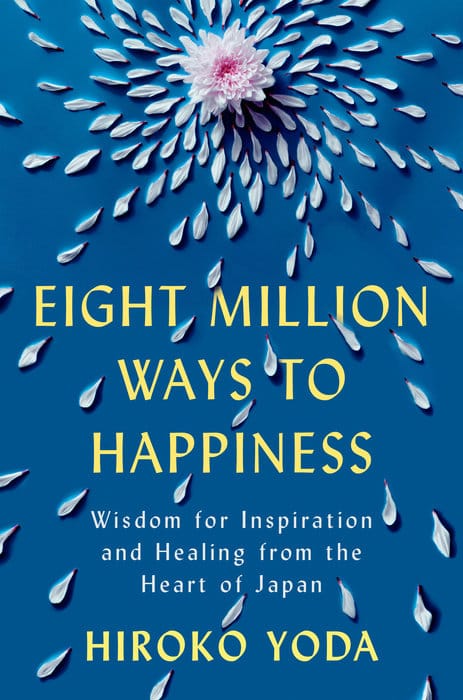
Japanese cultural historian Hiroko Yoda explains the Japanese mindset to Westerners by sharing her own journey with Japanese ritual and spirituality after the deaths of her parents.
My Review
As the author points out, the Western world often has a hard time understanding Japanese culture. In many ways, our views of the world and of human interaction clash quite noticeably, and miscommunication between our peoples is very common. Hiroko Yoda is Japanese but has spent much of her life in the United States, so she is able to bridge the cultural gap and explain each side’s perspective to the other. In this book, her focus is on Japanese spirituality and the many ways it differs from the religious vs anti-religious mindset of most of the rest of the world.
I’ve always been intrigued by Japanese philosophy and often feel like my own philosophy is very similar, so I was excited to read this book.
What I loved
The author makes it clear that, while very few Japanese people consider themselves to be “religious,” spirituality and rituals play a huge part in Japanese culture. To most Japanese people, their spirituality isn’t so much about “belief” as it is about respect and gratitude. That can be difficult for many religious or even non-religious Western people to understand. I think the term “agnostic” could apply – the feeling that some higher power probably exists, but not worrying about putting a name or a dogma to it. However, for the purposes of tradition and cultural rituals, most Japanese adopt a sort of hybrid Shinto-Christian-Buddhist blend of observances.
I really enjoyed learning about all of this, especially the more philosophical tangents on Japanese wisdom and how to live in gratitude. It’s a beautiful way to live, and I’m definitely taking a lot away from this book that I hope to apply in my own life.
What I didn’t love
My only problem with this book was how repetitive it was. The author would repeat the same statistics about religion in Japan in pretty much every chapter, and even some of her anecdotes were shared more than once. I guess maybe she expects that people will jump around in it and read a chapter here or there, but that’s not how I read, and it made the book feel too long. I ended up skimming a lot of the second half.
Conclusion
Overall, though, I really enjoyed my time with this book. If you’re interested in Japanese culture or spirituality in general, I recommend checking it out. It might also offer comfort to anyone experiencing grief.
Many thanks to NetGalley and Dutton for providing me the eARC for review consideration.
You can buy Eight Million Ways to Happiness here on Bookshop.org*, or look for it wherever you get books.
*As an affiliate, I’ll earn a small commission from any purchase made through this link, at no extra expense to you.